 Call Us Now
 Email Us Now
Florida treats motorcycle claims differently from car claims from the moment a crash happens, and most riders don’t find this out until they’re already dealing with an adjuster. Motorcycles carry no personal injury protection coverage under Florida law, which changes both the first phone call to make and the leverage a rider has later.
A motorcycle accident in Lakewood Ranch moves on a different track than the fender-benders most people picture with car claims.
Key Takeaways:
- Florida excludes motorcycles from the state’s no-fault PIP system, so riders have no automatic $10,000 medical benefit after a crash.
- Riders 21 and older can legally skip a helmet only if they carry at least $10,000 in medical benefits coverage under Florida Statute Section 316.211.
- Because PIP doesn’t apply, motorcyclists can pursue pain and suffering damages directly without meeting the serious injury threshold required in car accident cases.
- Lane splitting is illegal in Florida, and insurers frequently raise it, along with helmet use, to argue a rider shares fault.
- Florida’s two-year filing deadline for negligence-based injury claims applies to motorcycle crashes the same as any other.
Why Motorcycle Claims Work Differently Under Florida Law
No PIP Means No Automatic Medical Coverage
Florida Statute Section 627.736 defines the no-fault system in terms of four-wheeled motor vehicles, leaving motorcycles outside it entirely. A car occupant gets 80% of medical bills and 60% of lost wages from their own PIP regardless of fault, while an injured rider gets nothing from that source.
This gap means the first source of payment after a crash is usually health insurance, the at-fault driver’s liability coverage, or the rider’s own uninsured motorist coverage.
One Real Advantage Buried in This Exclusion
Because the no-fault system doesn’t apply to motorcycles, the serious injury threshold that limits car accident victims to economic damages unless they meet strict criteria doesn’t apply either. A rider can pursue pain and suffering directly against the at-fault driver without proving permanent injury first. This distinction rarely gets mentioned by insurers negotiating with an unrepresented rider.
Why UM Coverage Matters More for Riders Than Drivers
Florida doesn’t require bodily injury liability insurance for cars, and it doesn’t require any insurance at all to register a motorcycle. A rider hit by an uninsured driver, which happens often given Florida’s insurance gaps, may have no source of recovery beyond their own uninsured motorist coverage if they carry it.
Immediate Steps After a Crash on Lakewood Ranch Roads
Get Off the Road, Then Get Checked Out
Your first priority after a motorcycle crash is getting clear of traffic and getting medically evaluated. Move to the road shoulder if you’re able, particularly on stretches of SR 70 or Lakewood Ranch Boulevard, where traffic doesn’t slow down quickly. Motorcycle crash injuries are not always obvious at the scene, so getting checked out matters even if you feel able to stand and talk.
Document the Scene Before Anyone Moves Anything
Photograph the bike’s position, skid marks, road debris, and all vehicle damage from multiple angles before traffic clears the area. Get contact information from every available witness, since a rider’s account can carry less weight with insurers than corroborating testimony.
Say Less Than You Think You Should
Avoid discussing fault at the scene, even in casual terms, since brief comments get repeated in insurance investigations later. This applies to the other driver, responding officers, and anyone from an insurance company who calls within days of the crash. Stick to factual details and let the evidence establish what happened.
The Helmet Question and Why It Complicates Fault
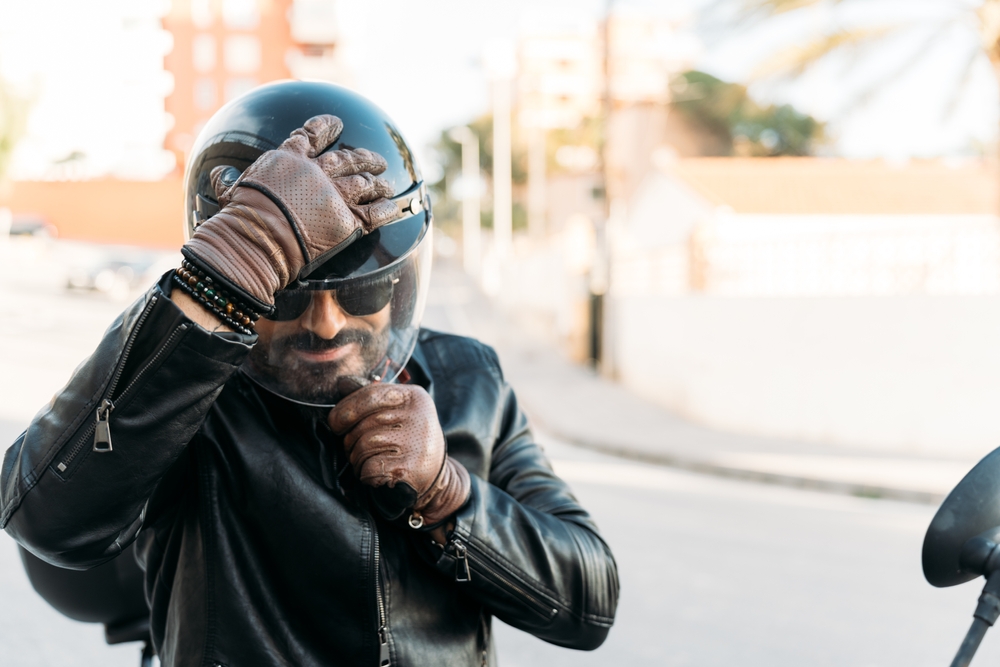
Helmet Status Doesn’t Decide Liability, But It Shapes the Argument
Whether a rider caused the crash and whether a rider’s injuries were made worse by not wearing a helmet are two separate questions insurers often blur together. Defense arguments commonly claim that head or facial injuries would have been less severe with a DOT-approved helmet, which can increase the fault percentage assigned to the rider even when the other driver caused the collision.
Eye Protection Rules Apply Regardless of Helmet Status
Florida requires eye protection for every motorcycle operator, with none of the age or insurance exceptions that apply to the helmet law. This detail sometimes surprises riders who assumed the same exceptions covering helmets also covered eyewear. It rarely becomes a major factor in a claim, but it’s worth knowing before an adjuster brings it up.
Lane Position Gets Scrutinized Closely
Lane splitting is illegal under Florida Statute Section 316.209, and evidence that a rider was doing it at the time of a crash can shift a meaningful share of fault. Lane sharing, meaning two motorcycles riding side by side within a single lane, remains legal and shouldn’t be confused with splitting. Insurers sometimes conflate the two when reviewing a claim, which is worth catching early.
Motorcycle Accident Steps Lakewood Ranch, FL Riders Take Toward a Claim
Motorcycle accident claims in Lakewood Ranch generally move through these stages once the immediate crash response is over.
Sorting Out Which Insurance Actually Applies
Since PIP isn’t in play, the claim usually starts with the at-fault driver’s bodily injury liability coverage, assuming that driver carries any. If they don’t, or if coverage runs out quickly, given the severity typical of motorcycle injuries, the rider’s own UM coverage becomes the next layer to pursue. Health insurance often covers treatment in the meantime, sometimes with a reimbursement obligation once a settlement comes through.
Financial Responsibility Still Applies Even Without Mandatory Insurance
A rider found at fault for a crash can still be held personally liable for the other party’s damages, regardless of whether Florida required motorcycle insurance in the first place. This financial responsibility exposure is one reason many riders carry liability coverage voluntarily, even without a state mandate.
Building a Claim That Accounts for Injury Severity
Motorcycle crashes tend to produce more serious injuries than comparable car accidents, given the limited protection a rider has compared to an occupant inside a vehicle. Medical documentation, from the initial ER visit through any ongoing treatment, becomes the foundation for a claim that reflects the real cost of recovery. Gaps in treatment give insurers room to argue the injury wasn’t as serious as claimed.
Before You Talk to an Insurance Adjuster
A few habits protect a claim while the details are still being sorted out:
- Consider requesting a copy of the police report once it becomes available, since it often includes details a rider didn’t observe firsthand.
- Many riders find it helpful to keep the damaged helmet and gear rather than discarding them, since they can serve as evidence later.
- Consider avoiding a recorded statement with any insurer until you understand which policies might apply to the claim.
- It often helps to track every medical visit and expense in one place from the start, since motorcycle claims tend to involve more providers over time.
These are legal considerations, not medical ones. A treating physician remains the right source for questions about recovery or activity restrictions.
Common Lakewood Ranch Motorcycle Accident Questions Our Attorneys Hear
A: No. Speed is one factor among several that insurers and courts weigh, and Florida’s current modified comparative negligence rule allows recovery only if a rider’s assigned fault is 50% or less.
A: Not automatically. It can affect how injury severity is argued, particularly for head injuries, but it doesn’t eliminate a claim over conduct unrelated to how the crash happened.
A: Yes. Florida’s statutes apply statewide, and where you live doesn’t limit where a crash can be pursued, though it may affect which court has jurisdiction.
A: The absence of PIP means the claim relies more heavily on proving fault clearly from the outset, since there’s no automatic coverage cushioning the early stages. Insurance company bias against riders also tends to require more deliberate pushback than a typical car accident claim. Medical documentation carries extra weight given the frequency of serious injuries in motorcycle crashes.
A: Most firms handling these cases, including this one, offer a free consultation and work on contingency, meaning payment comes only from a successful outcome. There’s no obligation attached to asking questions before deciding how to proceed.
A: Florida’s modified comparative negligence rule reduces recovery by the percentage of fault assigned, as long as that percentage stays at 50% or below. Above that threshold, recovery isn’t available, which makes an accurate fault investigation especially important and often worth a lawyer’s early involvement.
Riding Forward From Here
A motorcycle crash changes the calculation in ways a typical car accident doesn’t, from the insurance that applies to the bias a claim has to overcome. Getting a clear read on where a specific case stands doesn’t require committing to anything beyond a conversation.
Legler, Murphy & Battaglia, PLLC handles motorcycle accident claims across Manatee County, working on a contingency basis with no cost unless the case succeeds. Call our Bradenton office at 941-748-5599 to talk through what happened.