 Call Us Now
 Email Us Now
Bradenton Premises Liability Lawyers

A business that ignores a hazard it knew about is not just careless. Under Florida law, it is liable. Property owners have a legal duty to keep their premises reasonably safe, and when they skip it and someone gets hurt, they have to answer for it.
If you were injured on someone else’s property in Bradenton, the premises liability lawyers at Legler, Murphy & Battaglia, PLLC can prove what the owner knew and when they knew it, and pursue full payment for your injuries. We have represented injured people across Southwest Florida since 1989.
You should not have to pay for a hazard someone else left there. We build the case that puts it back on them. Free case review: 941-748-5599.
Not sure where your injury leaves you?
Call our office at 941-748-5599 for a free case evaluation.
Key Takeaways
- Florida Statute 768.0755 requires a slip and fall victim to show the business knew, or should have known, about the hazard — and we find that evidence.
- Florida Statute 768.81 allows you to recover unless you were more than half at fault — an owner blaming you does not automatically end a claim.
- Evidence of notice, including prior complaints, inspection logs, and surveillance video, disappears quickly — acting fast is essential.
- The filing deadline for most premises liability claims is two years under Florida Statute 95.11.
What Is Premises Liability and When Does It Apply?
Premises liability is the legal theory that holds property owners responsible when someone is hurt because of a hazard the owner failed to fix or warn about. It applies whenever a dangerous condition on someone else’s property causes your injury.
Under Florida law, a property owner owes visitors a duty to maintain reasonably safe conditions. That duty covers obvious hazards like wet floors and hidden ones like defective railing or uneven pavement that the owner had time to find and fix. If they failed that duty and you were hurt, a claim is available. The law reaches businesses, landlords, government entities, and private homeowners.
What Does Florida Law Require a Business to Prove About a Slip and Fall?
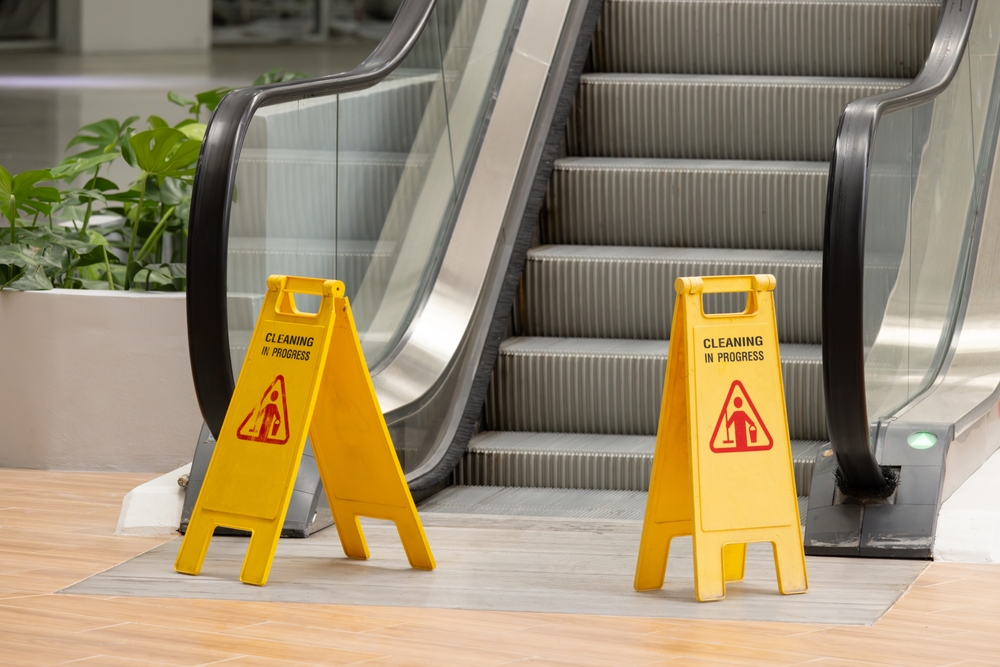
Nothing — it requires you to show the business knew or should have known about the hazard. That is the key legal standard, and it is where cases are usually won or lost.
Florida Statute 768.0755 places the burden on the injured person to show the business had actual or constructive knowledge of the dangerous condition. Constructive knowledge means the condition existed long enough that a reasonable inspection would have found it. That is why we demand inspection logs, maintenance records, incident reports, and surveillance footage fast, before they are overwritten or claimed lost.
Injured at a store, restaurant, or business on 14th Street W or anywhere in Bradenton? Call 941-748-5599.
What Kinds of Hazards Lead to Premises Liability Claims?
Any condition the owner should have addressed. The list is wide, and some of the most common in Bradenton involve water and poor lighting.
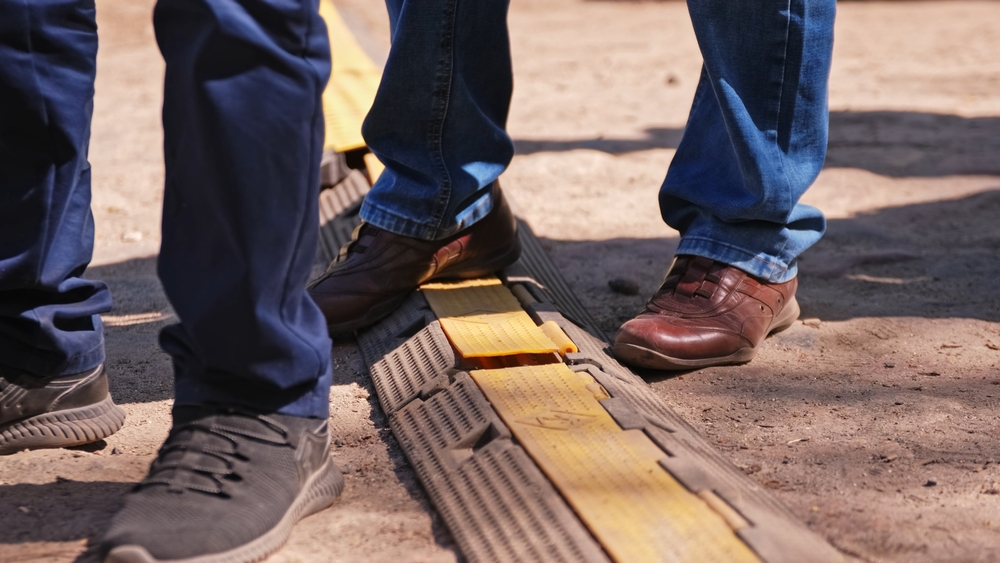
Wet floors and spills without warning signs are the most typical, along with uneven pavement, broken steps, damaged handrails, poor lighting in parking lots and stairwells, and negligent security at properties with a known crime history. Near the Riverwalk and along the waterfront, wet entryways and slippery surfaces are recurring problems. Near the Manatee County Courthouse and along 14th Street W, retail and commercial hazards tend to dominate. We look at the specific property and what the owner knew or should have found.
What If the Owner Says You Were Not Paying Attention?
You can still recover unless you were more than half at fault. Florida trims a claim by the visitor’s share of fault, but an owner’s accusation is not evidence.
Under Florida Statute 768.81, you lose the right to recover only if you are found more than 50 percent responsible. Blaming the visitor is a standard defense, and we counter it with the physical evidence: how long the hazard sat there, whether it was visible, and what warnings, if any, the property offered. Being in a hurry or looking at your phone does not hand the owner the claim. The evidence decides it.
What Can a Premises Liability Claim Recover?
The real cost of the injury, including what comes later. Falls and property injuries can be more serious than they first seem.
A fair claim covers your current and future medical bills, any rehabilitation, lost income during recovery, lasting limitations, and the physical and emotional toll of the injury. For older adults, a fall on someone else’s property can mean a fractured hip or a head injury that changes independence permanently. We work with your doctors and, when needed, life-care planners before settling, so future costs are not dropped onto you.
For injuries tied specifically to a slip and fall, our Bradenton slip and fall attorneys handle those claims. For the full range of personal injury cases across the area, our Bradenton personal injury attorneys can help.
What Is the Deadline to File a Premises Liability Claim in Florida?
Generally two years from the date of the injury. Florida Statute 95.11 sets a two-year limit on these negligence claims, and letting it lapse usually ends the case.
The evidence deadline is even tighter. Surveillance footage is often overwritten within days, and incident reports can disappear. Acting quickly lets us lock that material down before it is gone.
Filing deadlines can change and narrow exceptions exist. Confirm your date with an attorney.
What Bradenton Premises Liability Lawyers Do for You
We prove the owner knew about the hazard, prove what the injury cost you, and push for a fair result, at trial if needed. Every case is built from the start as one a jury may decide.
That means sending preservation letters for surveillance and incident records, gathering the maintenance history, working with your doctors so the record is complete, and taking the case to the 12th Judicial Circuit at the Manatee County Courthouse if the offer is not fair.
You pay nothing up front. You don’t pay until and unless we win your case.
Ready to put the hazard back on the owner? Call 941-748-5599.
Frequently Asked Questions
Possibly. A grocery store claim turns on what the store knew about the hazard and how long it was there. We investigate the inspection logs and surveillance footage right away, because that evidence disappears fast. A free review tells you where you stand.
Keep a copy of it and note what you said, but do not add admissions of fault. An incident report creates a record of the event, which is helpful, but it is not a legal document that settles the case. Your statement in it can matter later.
That is an issue we address, not a case-ender. A visible hazard without a warning sign still points to the property owner, and how visible it really was depends on the specific lighting, location, and conditions. Bring us the facts and we will assess it.
Yes. Some premises liability injuries, especially to the head, back, and hip, get worse in the days after the fall. See a doctor as soon as symptoms develop and keep the records. A gap in treatment can be explained, and a free review tells you where you stand.
Claims against government entities are possible, but they come with shorter notice deadlines and different rules. Those cases need prompt attention, so reach out right away if the hazard was on public property.
Homeowners carry liability coverage, and a premises liability claim generally runs through that coverage. You can often seek fair compensation without a personal dispute with a neighbor. We explain the mechanics at no charge.
Nothing up front. We work on a contingency fee, so our fee comes from the recovery only if we win, and the first case review is free.
Talk to Bradenton Premises Liability Lawyers Today
A hazard that could have been fixed, and wasn’t, is not bad luck. It is liability. We build the case that proves it. Legler, Murphy & Battaglia, PLLC has stood up for injured people in Bradenton and across Southwest Florida since 1989, and your first case review is free.
All Injuries. All The Time.
Call 941-748-5599 now, or reach out online to get started.