 Call Us Now
 Email Us Now
Lakewood Ranch Slip and Fall Attorney
When a fall injures you in Lakewood Ranch, you can pursue compensation from whoever failed to keep the property safe, and in a community this new, that might be the builder as much as the property owner. We can help you figure out which.
Lakewood Ranch is one of the newest communities in Florida, which sounds like it should mean fewer hazards, but it doesn’t always work that way. New construction creates its own risks. Freshly poured concrete that wasn’t cured properly, pavers set before the ground fully settled, and common areas opened to residents before every inspection was complete can all become the basis of a fall.
A slip and fall attorney Lakewood Ranch clients hire has to look at construction quality and timeline, not just whether a spill sat too long on a store floor.
Not sure whether your fall traces back to maintenance or construction?
Call our office at 941-748-5599 for a free case evaluation.
New Doesn’t Mean Hazard-Free

In a fast-built community like Lakewood Ranch, a fall can trace back to how something was constructed rather than how it was maintained, which opens a path to the builder that older-community cases rarely have.
Builders working on a tight schedule sometimes open a clubhouse, pool deck, or walkway to residents before every final inspection wraps up, and a defect that would normally get caught gets missed in the rush to finish a phase of the development.
Paver walkways throughout Lakewood Ranch’s villages can shift within the first year or two if the base beneath them wasn’t compacted correctly, creating a trip hazard that looks like normal wear but actually traces back to a construction shortcut.
Settling issues show up in unexpected places, too. A newly poured sidewalk section that meets an older section at a slightly different height creates a lip that’s easy to miss, especially at dusk or in areas without adequate lighting yet to be installed.
Newly built retail spaces near Waterside Place and Main Street sometimes open with flooring transitions, uneven thresholds, or lighting that wasn’t properly tested before the public started walking through, since retail buildouts often move fast to meet a lease deadline.
Where These Falls Happen
Waterside Place draws heavy foot traffic to its restaurants and shops, especially during weekend events, and falls here often tie back to outdoor dining areas, waterfront walkways, or spills that build up faster than staff expect during a busy event.
The waterfront boardwalk sections in particular combine outdoor exposure with heavy foot traffic, and a wet surface after rain or morning dew can catch a distracted visitor off guard before staff have a chance to address it.
Main Street at Lakewood Ranch sees a similar pattern, with sidewalk cafes and evening foot traffic creating conditions where a hazard can sit unnoticed until someone gets hurt.
Retail centers near the University Town Center border generate their own share of cases, tied to entryways left wet after Florida’s frequent afternoon storms or spills near food court seating.
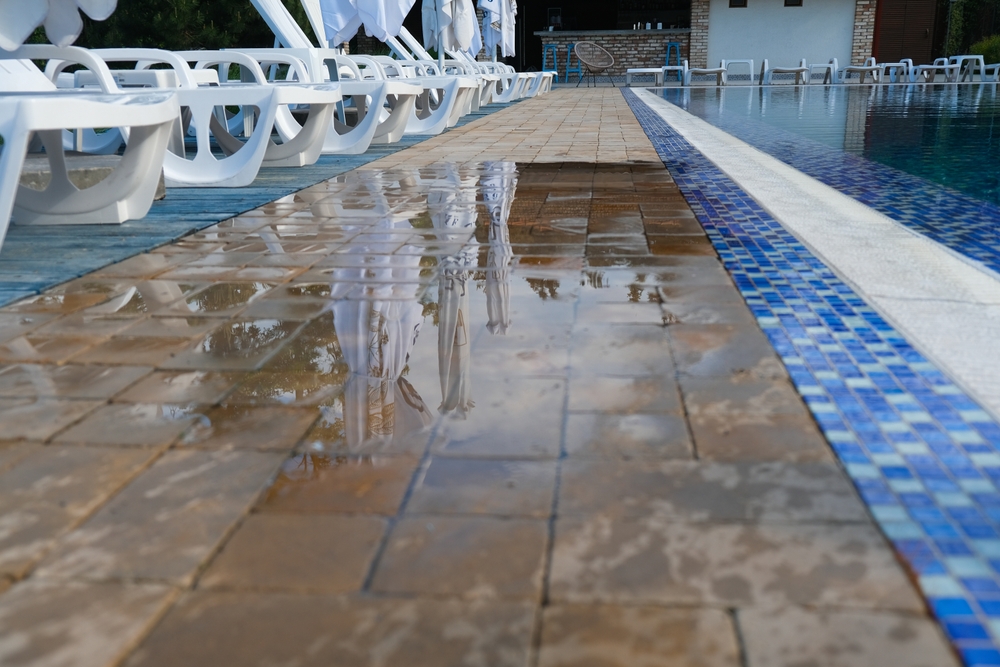
Gated community clubhouses and pool decks throughout Lakewood Ranch’s many neighborhoods produce a steady stream of falls tied to wet tile, uneven pool coping, or poor lighting in parking areas after dark.
Fitness centers within these communities add their own risk, since equipment areas and locker rooms see near-constant foot traffic in bare feet or athletic shoes across surfaces that need frequent cleaning to stay safe.
The Legal Standard That Decides These Cases
Florida Statute 768.0755 requires proving a business or property owner knew, or reasonably should have known, about a hazard before liability attaches. Falling alone isn’t enough.
Actual knowledge means the staff saw the problem and did nothing. Constructive knowledge means the hazard existed long enough, or recurred often enough, that reasonable inspection should have caught it.
Timing decides most of these cases in practice. A hazard that developed moments before a fall looks very different in a claim than one that a property manager walked past multiple times that same day.
For new construction specifically, a third path sometimes applies. If a defect traces back to how something was built rather than how it was maintained, the builder or contractor can bear responsibility independent of whether the current property owner had any knowledge at all.
This distinction matters quite considerably in Lakewood Ranch, where a defect might be only a year or two old rather than the product of decades of gradual wear that shows up in older Florida communities nearby.
Falls in Active Adult and Golf Communities
Lakewood Ranch’s numerous 55-and-older and golf course communities bring a specific pattern of cases, often involving clubhouse dining rooms, locker rooms, and cart paths that see heavy daily use.
Falls among older residents often lead to more serious claims than a similar fall would for a younger person, which affects both severity and claim value. The same incident that leaves a younger person unhurt can produce a significant injury claim for an older resident, so these cases tend to carry higher stakes and warrant careful documentation of the full impact.
Many of these communities are still transitioning from developer control to resident-run homeowners associations, and that handoff can create confusion about who was actually responsible for maintenance at the time of a fall.
A fall accident attorney Lakewood Ranch, FL, clients trust has to determine whether the original developer, a transitional board, or a fully resident-controlled association held maintenance responsibility on the specific date of the incident.
The 50 Percent Rule and Builder Liability Together
Florida’s recent tort reform bars recovery entirely for anyone found more than 50 percent at fault. Insurers still raise the usual defenses, arguing that a hazard was open and obvious or that the injured person wasn’t paying attention.
New construction cases add a layer that these defenses don’t always anticipate. When a defect stems from substandard workmanship, the comparative fault conversation shifts, since a hidden construction flaw is harder to call open and obvious than a spilled drink in plain view.
A premises liability attorney Lakewood Ranch residents choose sometimes pursues both a premises claim against the property owner and a separate construction defect claim against the builder, particularly when the hazard clearly traces back to how a walkway or pool deck was originally built.
A construction-related fall can involve the builder, the property owner, and a transitioning HOA all at once, and each one points at the others. Call our office at 941-748-5599 for a free case evaluation, and we will sort out who was actually responsible on the day you fell.
Apartment Complexes Face a Specific Legal Presumption
Florida’s HB 837 created a specific presumption against liability for multifamily residential properties that install certain security measures, including adequate lighting and functioning cameras in common areas.
Newer apartment complexes throughout Lakewood Ranch often already have these features installed from day one, which can make overcoming the presumption more difficult than it would be at an older property that added security only after an incident.
Why Local Experience Matters Here

Lakewood Ranch spans both Manatee and Sarasota counties, and knowing which courthouse a specific claim belongs in matters for filing purposes, even though both fall under the Twelfth Judicial Circuit.
Our firm has represented injured clients throughout this region since 1989. Every case stays with one lawyer from intake through resolution, and we prepare each file as though it’s headed to trial.
Anyone comparing a slip and fall attorney Lakewood Ranch families recommend should ask how the firm handles the construction-defect angle specifically, since not every premises lawyer thinks to investigate whether a hazard traces back to the builder rather than day-to-day maintenance.
Frequently Asked Questions
Yes, in addition to or instead of a claim against the property owner, depending on who actually controlled the area and what caused the specific defect. These cases sometimes name both parties until it’s clear which one bears primary responsibility.
The timing of that handoff matters. If the developer still controlled the property when the hazard was created, the developer may bear responsibility even if the HOA had already taken over by the time you actually fell.
The same knowledge standard applies, but private club membership sometimes raises additional questions about liability waivers signed at joining, which need careful review to determine what they actually cover.
Cart paths follow similar premises liability principles, though the standard of care can factor in that these paths are designed for slower, different traffic than a standard walkway.
No, the same knowledge standard applies regardless of whether the hazard was indoors or outdoors, though outdoor events often involve additional parties, such as an event organizer separate from the property owner.
Talk to a Lakewood Ranch Slip and Fall Lawyer Before Evidence Disappears

Construction records, maintenance logs, and security footage all have a way of disappearing once a property moves on from an incident. Getting an investigation started early protects what’s left of that evidence.
Call our office at 941-748-5599 today for a free case evaluation. We work on contingency, so you owe nothing unless we recover money on your behalf.
All Injuries. All The Time.