
 Call Us Now
 Email Us Now
Sarasota Truck Accident Attorney
A serious truck crash in Sarasota can make several parties liable for your injuries at once, and finding all of them is where a claim is won or lost, which is exactly what we do from day one. A car accident usually means one at-fault driver and one insurance policy. A truck accident can mean five.
The driver, the motor carrier, the company that owns the trailer, the business that loaded the cargo, and the contractor who most recently serviced the brakes can all share responsibility for the exact same crash.
A truck accident attorney Sarasota clients hire has to identify every one of those parties quickly, before the evidence tying them to the crash starts disappearing.
Injured and not sure who’s responsible?
Call our Sarasota office at 941-366-3782 for a free case evaluation.
Where Sarasota’s Truck Traffic Concentrates
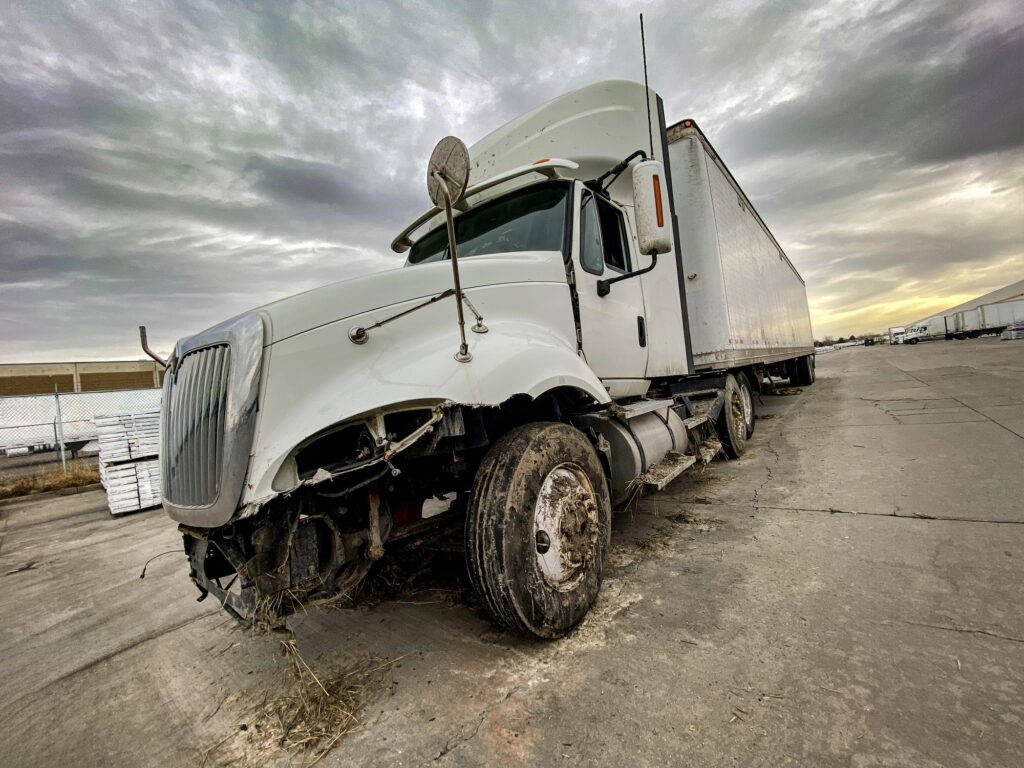
Interstate 75 carries the heaviest commercial truck volume through the county, and the exits at Fruitville Road, Bee Ridge Road, and Clark Road see frequent merging crashes as trucks slow from highway speed onto local roads.
Rear-end collisions cluster at these particular exits, especially during the afternoon rush, when a fully loaded truck needs considerably more distance to stop than the passenger vehicles suddenly braking in front of it.
University Parkway adds another layer, mixing airport cargo traffic headed to Sarasota-Bradenton International with regular commuter traffic during the morning and evening rush.
Cattlemen Road’s warehouse and distribution corridor generates steady delivery truck traffic throughout the day, often involving box trucks and delivery vans rather than full tractor-trailers, though the legal issues overlap considerably.
Sarasota’s ongoing construction boom adds concrete mixers and dump trucks to residential corridors that weren’t built with that kind of traffic in mind, and these vehicles create blind spots and turning radius issues distinct from a standard commercial rig.
Federal Rules That Don’t Apply to an Ordinary Car Crash
Commercial truck drivers operate under hours-of-service regulations that cap driving to 11 hours within a 14-hour on-duty window, following at least 10 consecutive hours off duty.
A mandatory 30-minute break applies after 8 hours of driving, and weekly limits cap total hours at 60 or 70, depending on the carrier’s schedule. A driver who exceeded these limits creates a fatigue argument that doesn’t exist in a typical two-car crash.
Electronic logging devices track this data automatically, which means a truck’s compliance history is usually recorded somewhere, even when a driver or company would rather it wasn’t. Violations can trigger civil penalties and out-of-service orders for the carrier, findings that can later support a negligence claim.
Insurance requirements differ sharply, too. Federal law requires most interstate general freight carriers to carry at least $750,000 in liability coverage, far above what any private passenger vehicle in Florida is required to carry.
Carriers hauling hazardous materials face even higher requirements, sometimes reaching several million dollars in total coverage, since the potential scale of harm from a hazmat spill or fire far exceeds an ordinary vehicle collision.
That higher coverage exists because federal regulators recognize a fully loaded truck causes damage on a different scale than a passenger car, and the insurance requirement reflects that reality directly.
The Black Box Data Disappears Fast

Most commercial trucks carry an electronic control module that records speed, braking, and engine data in the moments before a crash, similar to an airplane’s black box.
Trucking companies aren’t required to preserve this data indefinitely, and some systems overwrite it within days or weeks, depending on the truck’s usage after the crash. A truck that returns to its normal delivery route right after a crash risks losing that data simply through continued ordinary operation.
A commercial truck accident attorney Sarasota FL clients trust sends a preservation letter immediately after being retained, demanding the trucking company preserve this data before routine operations erase it. Waiting even a short time to send that letter can mean the data is already gone by the time it arrives.
Dashcams, both facing the road and facing the driver, have become common in commercial fleets, and that footage carries the same urgency. Waiting even a few weeks to request it can mean the difference between having the evidence and losing it entirely.
Maintenance records tell a related story. A truck with a documented history of brake complaints or deferred repairs creates a pattern of negligence that goes well beyond the specific mechanical failure involved in any one crash.
Every one of these records, the black box, the dashcam, the driver’s logs, is on a deletion clock that started the moment the crash ended. Call our Sarasota office at 941-366-3782 for a free case evaluation, and we will get preservation letters out before the evidence is gone.
Who Can Actually Be Held Responsible
The driver bears direct responsibility in most cases, but the motor carrier employing that driver is usually liable too, under a legal principle holding employers responsible for an employee’s actions within the scope of the job.
Many truck drivers operate as independent contractors rather than direct employees, and trucking companies sometimes use that structure to argue they aren’t responsible for a contractor’s mistakes. Federal regulations often override that argument when the carrier controls the driver’s schedule and routes closely enough to functionally direct the work.
Cargo loading companies can bear separate responsibility when improperly secured or overloaded freight causes a rollover or a load to shift suddenly, since federal cargo securement rules apply regardless of who did the actual loading.
A shifted load doesn’t always show up as an obvious defect afterward, which is why identifying who loaded the truck and how becomes important early, before that company’s own records get discarded through routine business practices.
Maintenance contractors face liability too, when a mechanical failure like brake failure or a blown tire traces back to inadequate service records or skipped inspections that federal regulations require on a set schedule.
Even the company that leases trailers to a carrier can face scrutiny in some cases, particularly when a trailer’s own maintenance history, separate from the truck pulling it, contributed to the crash.
The 50 Percent Rule Still Applies
Florida’s modified comparative negligence rule bars recovery entirely for anyone found more than 50 percent at fault, and this standard applies to truck crashes exactly as it does to any other collision.
Trucking cases often involve less dispute over fault than a typical car accident, since a documented hours-of-service violation or a failed brake inspection creates a clear regulatory violation that’s harder for an insurance company to argue around.
That doesn’t mean insurers won’t try. A common tactic still involves arguing that the other driver merged unsafely or braked without warning, shifting blame away from the truck, regardless of what the black box data eventually shows.
Trucking companies also carry their own legal teams and rapid-response protocols, sometimes arriving at a crash scene within hours to begin building a defense before an injured driver has even left the emergency room.
Why Local Court Experience Matters Here

A semi truck accident attorney Sarasota residents choose needs experience with cases that move differently than a standard car accident claim, often involving federal regulations layered on top of Florida state law.
Our firm has represented injured clients in Sarasota County since 1989, appearing regularly at the Sarasota County Courthouse as part of the Twelfth Judicial Circuit.
Every case stays with one lawyer from intake through resolution. We prepare each file as though it’s headed to trial, since trucking companies and their insurers negotiate differently once they know a firm will actually litigate.
Nearly a century of combined courtroom experience across our attorneys means we’ve handled the layered federal and state issues these cases involve, not just the standard two-car collision most other firms are used to.
Frequently Asked Questions
Florida courts can generally still hear the case if the crash happened here, though serving an out-of-state company properly requires additional procedural steps compared to suing a local driver.
Yes. A claim can proceed against the driver’s estate, the motor carrier, and any other responsible party, though these cases involve additional procedural steps compared to a standard injury claim.
Passengers can generally pursue claims against any at-fault party involved in the crash, including the truck driver, the motor carrier, and potentially the driver of the vehicle they were riding in if that driver shares fault too.
Intrastate carriers follow separate state regulations rather than federal ones, though many of the same safety principles apply. Determining which set of rules governs your case affects both the insurance minimums involved and the evidence available.
Generally two years from the date of the crash under Florida’s current statute of limitations, though identifying every liable party can take time, which is why starting the investigation early matters.
Many of the same legal principles apply, including employer liability and maintenance records, though smaller commercial vehicles sometimes fall outside certain federal weight-based regulations that apply specifically to heavier trucks.
Talk to a Sarasota Truck Accident Lawyer Before Evidence Disappears

Black box data, dashcam footage, and driver logs don’t wait around. The sooner an investigation starts, the more evidence remains for your lawyer to build the case properly.
Call our Sarasota office at 941-366-3782 today for a free case evaluation. We work on contingency, so you owe nothing unless we recover money on your behalf.
All Injuries. All The Time.